Contact Number
- +91 9717548930
- Mon - Sat: 10.00 to 07.00
Enquire? Send Your Mail


Intake & Screening Systems
- Efficient collection of raw water from source
- Removes large debris like leaves, plastics, and stones
- Protects downstream equipment from damage
- Includes coarse and fine screening options
- Designed for rivers, lakes, and reservoirs
- Reduces load on treatment processes
- Corrosion-resistant and durable construction
- Low maintenance and easy cleaning
- Customizable based on flow and site conditions
- Ensures smooth and uninterrupted water supply
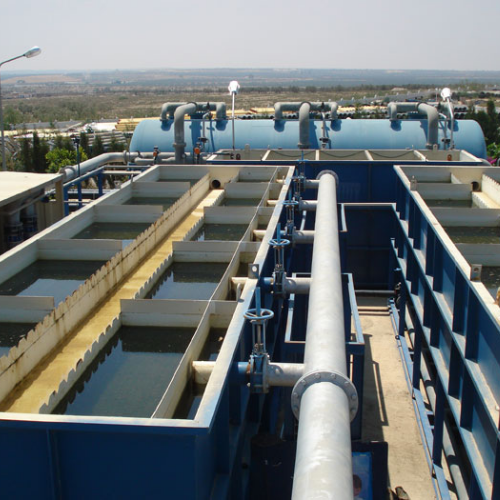
Intake & Screening Systems are the first and most crucial components of any water treatment plant. These systems are designed to draw raw water from natural sources such as rivers, lakes, and reservoirs while removing large floating and suspended debris. By ensuring that only relatively clean water enters the treatment process, intake and screening systems play a vital role in protecting downstream equipment and improving overall system efficiency.
The process begins at the intake structure, which is strategically installed at the water source. This structure is designed to collect water efficiently while withstanding environmental conditions such as varying water levels, currents, and weather changes. Intake systems may include pumps, pipelines, and channels that transport raw water from the source to the treatment facility.
Screening is a key function within this system. It involves the use of mechanical or manual screens to remove large particles such as leaves, branches, plastics, and other debris that may be present in the water. Typically, the system incorporates both coarse and fine screens. Coarse screens are used at the initial stage to capture larger objects, while fine screens further remove smaller particles that could affect subsequent treatment stages.